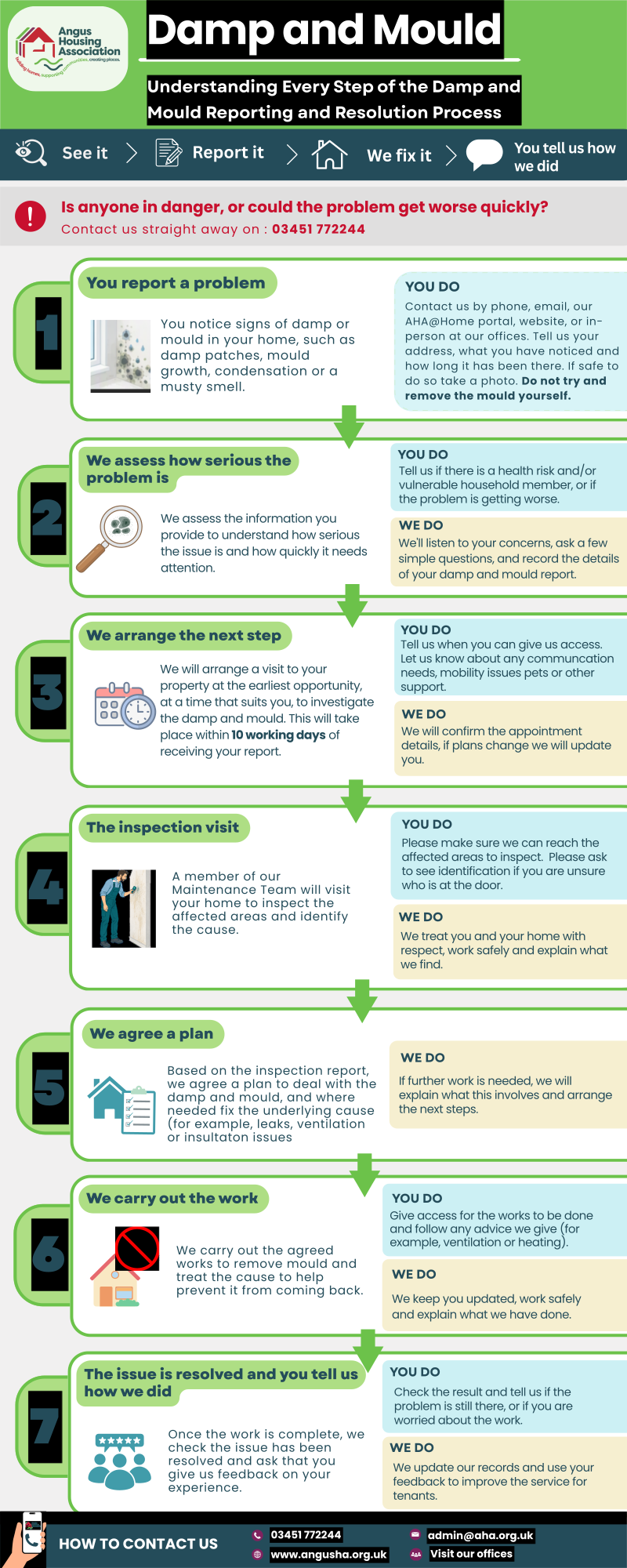
Damp and Mould
Damp and mould in your home
Everyone should have a safe and comfortable home. If you notice damp and mould in your home, please tell Angus Housing Association as soon as possible.
We will take your concerns seriously, investigate the cause and arrange any repairs or other action needed. Our aim is to identify and address the underlying cause, rather than only treating the visible mould.
To report damp, mould or condensation to Angus Housing Association, contact our Customer Service Team on 0345 177 2244, email admin@aha.org.uk, or come into either our Dundee or Arbroath offices as soon as you notice the issue.
Scotland’s introduction of Awaab’s Law
From 6 October 2026, new Scottish legislation will strengthen protections for tenants where damp and mould are reported in their homes. These changes form part of Scotland’s introduction of Awaab’s Law, which aims to ensure damp and mould issues are investigated and addressed more quickly.
Under the new regulations, landlords will be required to:
- Investigate reports of damp and mould within set timescales.
- Provide tenants with information about the findings of the investigation.
- Start any necessary repair work promptly where damp or mould presents a risk to health or safety.
How to report damp or mould
Please contact us as soon as you notice a problem. You can report:
- Mould on walls, ceilings, windows or other surfaces
- Damp patches or water staining
- A musty smell
- A leaking roof, pipe or appliance
- Water entering your home
- Condensation that is persistent or getting worse
- Damp or mould that has returned after previous work
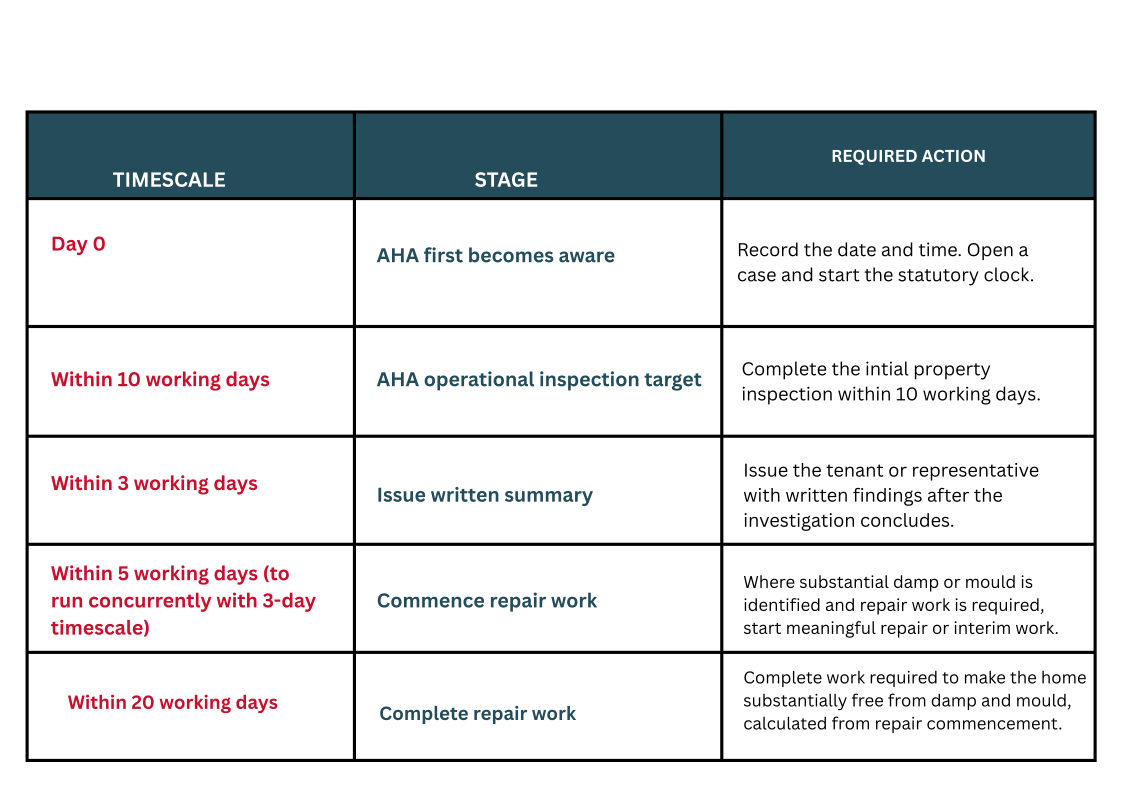
* Please note these are the maximum statutory timescales. Staff will act sooner where the condition, household vulnerability, an emergency response standard, or another legal timescale requires a quicker response.
For more information the Scottish Government’s Awaab’s Law : guidance for tenants in Scotland
What Can Tenants Do to Help Prevent Damp, Mould and Condensation?
There are simple steps you can take to reduce excess moisture in your home and help prevent damp and mould from developing:
- Open windows regularly to improve air circulation.
- Keep trickle vents open where fitted.
- Keep kitchen and bathroom doors closed when creating steam.
- Put lids on pans while cooking to reduce moisture in the air.
- Dry clothes outdoors where possible or in a well-ventilated room.
- Wipe condensation from windows and sills when it appears.
- Heat your home consistently where possible to help reduce condensation.
- Avoid placing large furniture directly against external walls, leaving a small gap for airflow.
- Do not block air vents or ventilation systems.
- Report leaks, faulty extractor fans, heating problems or signs of damp and mould promptly so they can be investigated and repaired.
For further information on the causes of damp and mould, how to prevent condensation, and advice on treating mould safely, please read our Damp & Mould Guide
You can also watch our short video for simple, practical tips on preventing damp, mould and condensation in your home.